
Last updated November 18, 2026
 Sliding glass doors
 Single hung
 Double hung
 Horizontal roller
 Casement
 Bay & bow
 Entry doors
 Impact garage doors
 PGT
 CGI
Free in-home measure and quote - PGT, CGI and CWS impact lines compared on your actual openings, style by style
Get your free estimateWindows & Doors Permits, Codes & Inspections in NV: What You Need to Know
A permit is not proof of a code-compliant installation. It is permission to begin one. The inspection is what matters, and here in North Las Vegas, inspectors check the U-factor and SHGC documentation against the label on the unit that’s actually in the wall, not the glossy brochure the salesperson left on your kitchen counter. We’ve watched homeowners wave a permit like it settles the question, only to fail a final because the window that showed up wasn’t the window that got approved. This guide walks through Nevada’s statewide code baseline, the City of North Las Vegas amendments that trip up out-of-area contractors, what a failed inspection actually costs you at insurance and title transfer, and which paperwork you should keep in a folder for the life of your house.
Quick Answer
In North Las Vegas, window and door replacements generally require a building permit, must meet Nevada’s energy code for Climate Zone 3B (fenestration U-factor of 0.40 or lower and SHGC of 0.25 or lower on the prescriptive path), and must pass a final inspection where the inspector verifies the installed unit’s NFRC label against the permitted specifications. The homeowner, not the contractor, inherits the consequences of a failed final: insurance questions, disclosure obligations at sale, and re-inspection costs. Confirm the permit is pulled under the City of North Las Vegas before any work starts.
Styles & brands we work with
- Single hung
- Double hung
- Horizontal roller
- Casement
- Bay & bow
- Sliding glass doors
- Entry doors
- Impact garage doors
- PGT
- CGI
Table of Contents
- Nevada’s Statewide Code Baseline and Where It Comes From
- Climate Zone 3B: The U-Factor and SHGC Numbers That Actually Apply
- North Las Vegas vs. Clark County: What Homeowners Should Ask Before Work Starts
- The North Las Vegas Permit Process, Step by Step
- What a Failed Final Inspection Means for Insurance and Title Transfer
- The Paperwork to Keep: NFRC Label, Permit Card, Inspection Sign-Off, Warranty
- Permit Exemption Myths: Replacement-in-Kind and Same-Size Openings
- Doors Are Not Windows: Egress, Tempered Glass, and Impact Rules
Nevada’s Statewide Code Baseline and Where It Comes From
Nevada does not write its building code from scratch. The state adopts a model code cycle, then layers amendments on top, and each jurisdiction – city or county – enforces its own version with its own review staff and its own inspection checklist. For windows and doors, that means three layers stack on top of each other: the structural and safety provisions of the International Residential Code, the fenestration performance requirements of the Nevada Energy Code (which tracks the IECC with state amendments), and the local administrative rules that govern how a permit gets pulled and what an inspector looks for on site.
North Las Vegas sits within Clark County geographically but is its own incorporated city with its own building department. That distinction matters more than most homeowners realize. A contractor who primarily works in unincorporated Clark County or in Henderson may know the county’s review preferences and still miss a North Las Vegas amendment, because the city has adopted specific administrative and energy compliance pathways that differ from its neighbors. When we quote a job in North Las Vegas, we confirm the current adopted code cycle with the city before ordering product – not after. That one phone call has saved more than a few installs from becoming re-orders.
The state baseline also sets the framework for how compliance is documented. Nevada follows the national pattern of requiring fenestration products to carry an NFRC (National Fenestration Rating Council) label showing the certified U-factor, Solar Heat Gain Coefficient, Visible Transmittance, and Air Leakage rating. That label is the physical evidence the inspector uses. If the label is missing, painted over during stucco patching, or shows numbers that don’t match the permit application, the inspection fails regardless of how well the window was installed.
Brands matter here too, but only in the sense that the manufacturer has to be able to produce certified ratings for the specific product line and configuration. Authorized installers for Andersen, Pella, Marvin, Milgard, PGT, and CGI can pull the exact certified ratings directly from the manufacturer’s certification database, which is what gets attached to the permit application. Working with a licensed contractor who is an authorized installer for the line being quoted keeps the paperwork traceable.
Climate Zone 3B: The U-Factor and SHGC Numbers That Actually Apply
North Las Vegas falls within IECC Climate Zone 3B – hot and dry. That’s the same zone designation printed on every energy compliance form in the city, and it drives the fenestration thresholds that apply to your replacement windows and glazed doors. Under the prescriptive path in the Nevada Energy Code for Zone 3B, fenestration products must meet a maximum U-factor of 0.40 and a maximum Solar Heat Gain Coefficient of 0.25. Those are hard ceilings, not targets to approach. Install a window with a U-factor of 0.42 and the permit application will be returned, even if the difference seems small.
What gets homeowners in trouble is the gap between the brochure and the label. A sales sheet might advertise “energy-efficient” or list a U-factor of 0.30 for a different configuration than the one quoted – say, a different glazing package, a different frame material, or a different size. The NFRC rating is product-specific. The exact unit delivered to the job site must match the certified rating on the permit. When inspectors verify in North Las Vegas, they read the label on the sash or frame. If the label has been removed and the inspector cannot confirm, the compliance pathway fails and the job stalls.
Solar Heat Gain Coefficient matters as much as U-factor in Zone 3B, and more than most people expect. SHGC measures how much solar radiation passes through the glass and becomes heat inside the house. In North Las Vegas summers, when afternoon temperatures crest past 110°F, a window with SHGC of 0.40 instead of 0.25 can load your air conditioner with hundreds of extra BTUs per hour per window. On a west-facing bedroom wall, that is the difference between a room that cools and a room that never quite does. The energy code is not an arbitrary hurdle here – it is the mathematically correct response to the climate.
There is one more wrinkle worth knowing. The compliance path matters. The prescriptive path sets specific maximum numbers per product. The performance path (whole-building energy modeling) allows trade-offs between envelope components, HVAC efficiency, and other factors. Some North Las Vegas projects can use the performance path if the builder or contractor runs the modeling software and submits the compliance report. Most residential replacement projects take the prescriptive path because it’s simpler and faster, and because replacing one window at a time cannot be modeled as whole-building optimization anyway.
Zone 3B Prescriptive Thresholds at a Glance
- Fenestration U-factor: 0.40 maximum (this includes windows, glazed doors, and skylights)
- Solar Heat Gain Coefficient (SHGC): 0.25 maximum
- Air Leakage (AL): 0.30 cfm/ft² maximum per NFRC
- Visible Transmittance (VT): not code-limited but affects daylight and visible comfort
- Verification: NFRC label must be present and legible at inspection
North Las Vegas vs. Clark County: What Homeowners Should Ask Before Work Starts
The single most common problem we see in North Las Vegas is a permit pulled in the wrong jurisdiction. A contractor who works mostly in unincorporated Clark County pulls a county permit for a house that sits inside North Las Vegas city limits, or the reverse. The permit number looks legitimate, the work looks finished, and then the homeowner discovers the city has no record of the inspection when they try to sell or refinance. That discovery can cost thousands to resolve after the fact.
Here’s the plain answer: confirm which jurisdiction your address sits in before anything else. A surprising number of North Las Vegas addresses are actually in unincorporated Clark County, and a surprising number of “county” houses are actually inside the city. The two building departments do not share inspection records. The permit belongs where the property is.
Beyond jurisdiction, the City of North Las Vegas has adopted its own administrative procedures and some energy compliance expectations that differ from Clark County’s. In our experience, the city’s plan review is specific about the documentation package: the fenestration schedule with NFRC ratings attached, the energy compliance form correctly filled for Zone 3B, the product cut sheets for every unit, and a site plan showing each opening to be replaced with its dimensions. Missing any of these sends the application back for revision, which adds weeks. We’ve seen out-of-area contractors lose a full month on a seven-window job because they attached the wrong energy form.
Questions to Ask Your Contractor Before Work Starts
- Which jurisdiction will pull the permit? Ask them to name the city or county and confirm it matches your property’s jurisdiction. If they hesitate, that’s the answer.
- What’s the permit number? You should have it in your hand before demolition day. If they say they’ll pull it “once we’re ready to start,” ask why not now.
- Which energy compliance path are you using, and can I see the form? A contractor who cannot produce the compliance form is not going to pass inspection.
- What are the U-factor and SHGC for the specific units being ordered? Not the product family – the exact units. Ask to see the NFRC certification for the specific model, size, and glazing configuration.
- Who attends the inspection? In North Las Vegas, the installer or a representative should be on site, with the permit card posted and the labels intact. Inspections that fail because the labels were removed are avoidable.
- What happens if we fail the final? A contractor who has no plan for a re-inspection is not a contractor who has done many. Ask the question.
TruePane Windows & Doors North Las Vegas is an authorized installer for more than a dozen manufacturer lines – including Andersen, Pella, Marvin, Milgard, PGT, and CGI – and we quote manufacturer lines side by side on paper so you see exactly what you’re buying before a permit is submitted. Our window installation in North Las Vegas process starts with the compliance form, not the order sheet.
The North Las Vegas Permit Process, Step by Step
The North Las Vegas permit process for window and door replacement follows a predictable sequence if the paperwork is right. Here is the path we follow for every job, and the path you should expect any contractor to describe before you sign:
- Property jurisdiction confirmation. Confirm the address is inside North Las Vegas city limits (or the appropriate jurisdiction) using the county assessor’s tool and the city’s own lookup. Document the confirmation.
- Product selection with certified ratings. Finalize the exact products – manufacturer, product line, size, glazing configuration, frame material – and pull the NFRC certified ratings for those specific configurations.
- Energy compliance form. Complete the Nevada Energy Code compliance form for Climate Zone 3B using the prescriptive path unless the project requires performance modeling. Attach the NFRC documentation.
- Fenestration schedule and site plan. Build a schedule showing every opening being replaced, with dimensions, product code, U-factor, and SHGC. Attach a site plan marking each opening’s location.
- Permit application submission. Submit to the City of North Las Vegas building department with the complete package. Application review timelines vary; a complete package moves faster than an incomplete one.
- Permit issuance and permit card posting. Once issued, the permit card gets posted at the job site, visible to the inspector.
- Installation with labels intact. During installation, do not remove, paint over, or cover NFRC labels. They must remain legible until the final inspection is signed off.
- Final inspection. The inspector verifies the installed units against the permitted documentation, checks the NFRC labels, checks flashing and sealing, and signs off. Only then is the permit closed.
We see variation in how quickly different job types move through plan review. A like-for-like replacement of a handful of windows in a standard SFR tends to move quickly when the paperwork is complete. A larger project that reconfigures openings, changes the number of units, or involves impact-rated product may trigger additional review. The North Las Vegas building department is not slow – it responds in proportion to the quality of the submission.
One point worth stating plainly: the permit is the beginning of the process, not the end. We’ve seen homeowners treat the permit card as an item to stick in a drawer once the crew leaves. The finished job has no standing until the final inspection signs off, and the sign-off gets recorded with the city. If a contractor tells you the inspection “isn’t necessary” or “we don’t need it for a replacement,” that contractor is either mistaken or hoping you won’t ask again.
What a Failed Final Inspection Means for Insurance and Title Transfer
This is the part most homeowners never hear until it becomes their problem. A failed final inspection – or worse, an installation performed with no permit at all – does not just mean the job needs to be fixed. It follows the house.
First, the insurance angle. Homeowner’s insurance policies generally cover sudden and accidental damage, not construction defects. If a window leaks and damages drywall because it was installed without proper flashing and never inspected, the insurer will investigate whether the work was permitted and inspected. Unpermitted work gives the insurer grounds to deny the claim or to non-renew the policy. We’ve seen claims denied over a $200 flashing defect that became a $12,000 mold remediation because the installation had no permit trail. The savings from skipping the permit are illusory when the insurance consequence shows up.
Second, the title and sale angle. Nevada disclosure rules require sellers to disclose known material defects and unpermitted work. When a title company or buyer’s inspector finds that windows were replaced without a permit, the seller is in a difficult position: either pay for retroactive permitting and inspection, or reduce the price. Retroactive permitting can require opening walls to verify flashing and insulation details – a cost far exceeding the original permit fee. We’ve worked with homeowners in North Las Vegas who faced this exact scenario on a sale that closed two months late because a prior window replacement was never inspected.
Third, the warranty angle. Many window manufacturers honor their product warranty only if installation was performed to code and, in some cases, by a licensed installer with a permitted job. An unpermitted install can void the product warranty entirely. The window may be under warranty for glass breakage and the homeowner may find the claim denied because the installation record doesn’t exist. That’s a separate loss from the insurance issue, and it compounds.
Failed final inspections also generate city records. When a final fails, that failure is logged against the property. A future buyer’s title search can surface it. We’ve seen buyers walk away from a North Las Vegas house over a single open permit from a decade-old window job. The remedy was straightforward but the disclosure was not, and the sale died while the paperwork got sorted.
The Paperwork to Keep: NFRC Label, Permit Card, Inspection Sign-Off, Warranty
There is a folder every homeowner should keep for the life of their house, and it should contain four documents from every window and door installation. Each one serves a distinct purpose. Lose one and you lose a specific protection.
- The NFRC label. It’s the physical proof that the unit in your wall is the unit that was permitted and tested. If a future buyer, insurer, or inspector needs to verify compliance, the label is the evidence. Photograph it before it’s covered, because installers sometimes remove or obscure it during trim work. Save the photograph with the sales receipt.
- The permit card and permit number. The permit number ties the job to the city’s record. Keep the closed permit card, or at minimum the permit number and the date of final inspection sign-off. If the city’s online records ever need to be pulled, the permit number is how you find them.
- The inspection sign-off. This is the single most important document in the folder. It records the date, the inspector, and the passing result. Without it, the permit is open in the city’s system and any future buyer’s title search will find it. With it, the record is clean.
- The warranty registration for both layers. Manufacturer warranties have two layers in most cases: a product warranty covering the glass and frame, and a workmanship or installation warranty covering the labor. Both need to be registered in writing, with durations stated. At TruePane, The Keystone Standard means both manufacturer warranty layers are registered in writing before we leave the job site, with durations stated in the homeowner’s hands.
Keep the four together. Tape the NFRC photograph and the inspection sign-off inside the folder, staple the permit card to it, and put the warranty registrations in the same place. The folder should live with your other home documents – the deed, the insurance policy, the appliance manuals. When you sell, it becomes an asset. When you file an insurance claim, it becomes the difference between coverage and a fight.
TruePane’s 90-Day Done Right Promise applies on top of The Keystone Standard. If something is not right after installation, we make it right, no paperwork fight. The two promises are separate from the manufacturer’s product warranty and are documented separately. You should be able to hold all three in your hand when the crew leaves. For homeowners considering replacement in the area, our window replacement in North Las Vegas page walks through how those three warranty layers get registered.
Permit Exemption Myths: Replacement-in-Kind and Same-Size Openings
You have probably heard some version of this: “it’s the same size, so no permit is needed.” Or “it’s just replacement, not new construction, so it’s exempt.” The persistence of these myths is remarkable given how clearly the code addresses them. Here’s the plain truth, stated as plainly as we can: in North Las Vegas, replacement of windows and doors generally requires a permit, and the replacement-in-kind exemption is narrower than most contractors imply.
The replacement-in-kind concept comes from provisions in the International Residential Code and adopted state amendments that allow certain repairs and replacements without a new permit, under specific conditions. The key conditions:
- No structural change. The replacement must not enlarge, reduce, or reconfigure the rough opening. New size, new shape, new frame type – any of these moves the job out of exemption.
- Same energy performance or better. The replacement must meet or exceed the fenestration requirements in effect for the current code cycle. A replacement that meets current code is compliant; a replacement that matches an older window’s performance but does not meet current code fails the condition.
- No change of use or occupancy. Converting a picture window to an egress door, or changing a fixed window to an operable one in a bedroom, triggers different rules entirely (egress, tempered glass, and sometimes structural).
- No change to egress paths. Bedroom egress windows have a specific clear opening requirement. A like-for-like replacement of a code-compliant egress window can proceed under exemption in some jurisdictions; a change that alters the clear opening cannot.
- Local administrative rules. North Las Vegas has its own administrative code that governs when a permit is required. It is more restrictive than the IRC’s baseline. When in doubt, the city’s building department will answer the question directly.
The most important myth to kill is the “same-size opening” one. A 36-by-60-inch replacement of a 36-by-60-inch window sounds like it should be exempt, and in some jurisdictions it can be, but only if all the other conditions are met – including the current-cycle energy compliance, which is what most homeowners and some contractors overlook. A window that installed at 0.40 U-factor in 2015 may need to be 0.40 U-factor again today, and the replacement product needs to certify to that. The size is one condition of many. The installation is not exempt because the opening size matches.
We treat every replacement as permit-required unless the city tells us otherwise in writing. That’s the conservative read, and it is the read that keeps you out of title-transfer trouble. Our door installation in North Las Vegas process follows the same rule – doors, especially exterior and glazed doors, often carry additional requirements because of egress, tempered glass, and impact ratings.
Doors Are Not Windows: Egress, Tempered Glass, and Impact Rules
Doors carry their own code stack. An exterior door is not just a window that opens – it is often an egress path, sometimes a tempered glass location, and always a thermal and air leakage boundary. The compliance path for a door replacement in North Las Vegas touches every one of these.
Egress: bedroom exterior doors and any door serving as a required egress path from a sleeping room must meet a minimum clear opening. Changing a door’s configuration can trigger this even when the rough opening stays the same. We’ve seen a homeowner replace a solid garage-to-house door with a glazed model, only to discover the door now needs tempered glass because it falls within a certain distance of a floor surface and near a stairway landing. The rule is specific and the inspector will measure.
Tempered glass: any glazing in a door, sidelite, or within a certain distance of the floor or a walking surface may need to be tempered safety glass. The glazing in a patio door or French door is not automatically tempered; it depends on the panel location and size. Impact door lines like those from Therma-Tru and PGT have specific tempered configurations that meet door-light requirements. The label on the glass – not the brand – is what the inspector reads.
Impact ratings: North Las Vegas is inland, but parts of the valley are within the broader windborne debris region and some specific jurisdictions or HOA requirements may call for impact-rated doors in particular locations. Check with the city before selecting a door. A non-rated door installed where an impact-rated door is required is a failed final.
Doors are also more likely to be permitted when the opening is changed at all. Sliding and patio door replacements frequently involve enlarging the rough opening, moving a header, or changing the egress configuration. This moves the job straight to permit-required. Our TruePane Windows & Doors North Las Vegas home page lists the door services we handle and the manufacturer lines we install, including Therma-Tru and PGT impact-rated products. If you’re pricing a patio door or a French door, ask for the NFRC and impact documentation before signing anything – a door quoted without that paperwork is a door quoted for someone else’s jurisdiction.
Common Mistakes to Avoid
- Assuming your address is in the city when it’s in unincorporated Clark County – or the reverse. We’ve seen entire permits need to be refiled because the contractor did not check. Look up your parcel on the county assessor’s site and confirm the jurisdiction before the first call.
- Trusting a brochure’s U-factor instead of the NFRC label. The brochure often lists the product family’s best configuration, not the one being quoted. The exact units being installed must match the label, and the inspector will read the label, not the brochure.
- Removing or covering the NFRC label during installation. Trim, caulk, and stucco all get applied to the window surface, and one of the first casualties is the label. Photograph every label before trim goes on. The inspector cannot verify what they cannot read.
- Skipping the permit “because it’s just replacement.” This is the fastest path to an insurance denial and a delayed sale. Nevada’s adopted code, with North Las Vegas’s own amendments, generally requires the permit for replacement work. Assume yes unless the city tells you no in writing.
- Failing to close the permit with a final inspection. Open permits show up in title searches. A house can close escrow with an open permit only if the buyer’s lender doesn’t care, and most do. Close every permit, every time.
- Treating warrant registrations as optional. Both layers of manufacturer warranty – product and workmanship – must be registered in writing. An unregistered warranty is not a warranty. We register both layers before the truck leaves the driveway for exactly this reason.
- Hiring the cheapest bid in the room and getting what was paid for. The discount often comes directly out of the permit and inspection line, which are the line items that protect you at resale. The bid that removes them is not a competitive bid – it is a bid for a different job.
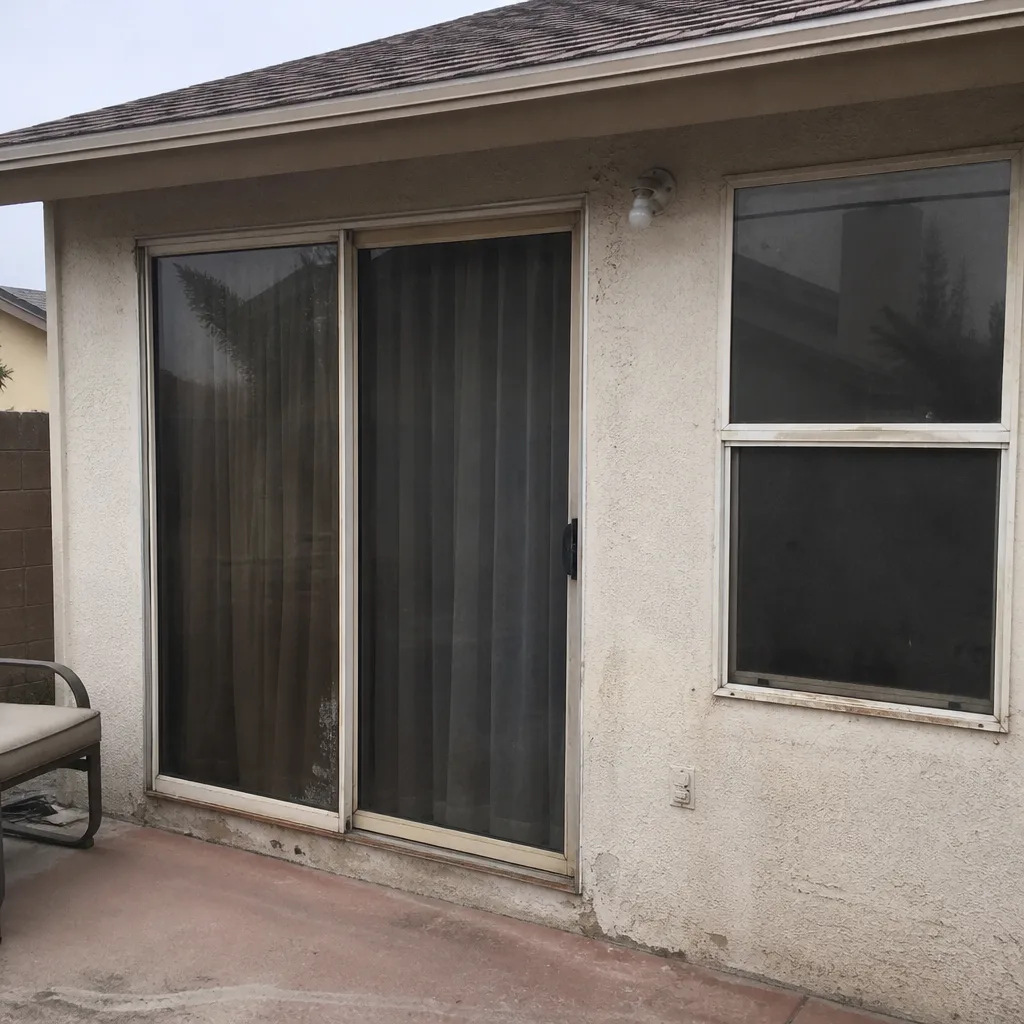
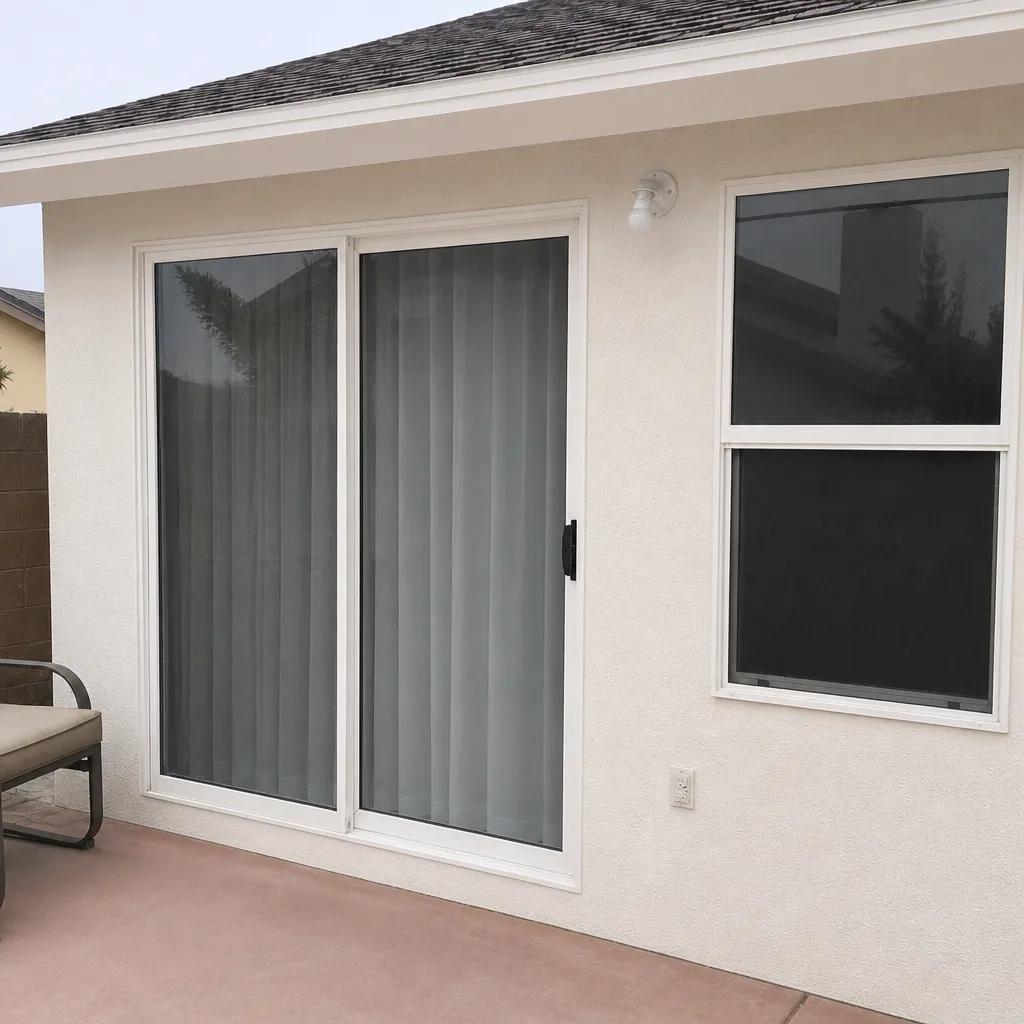
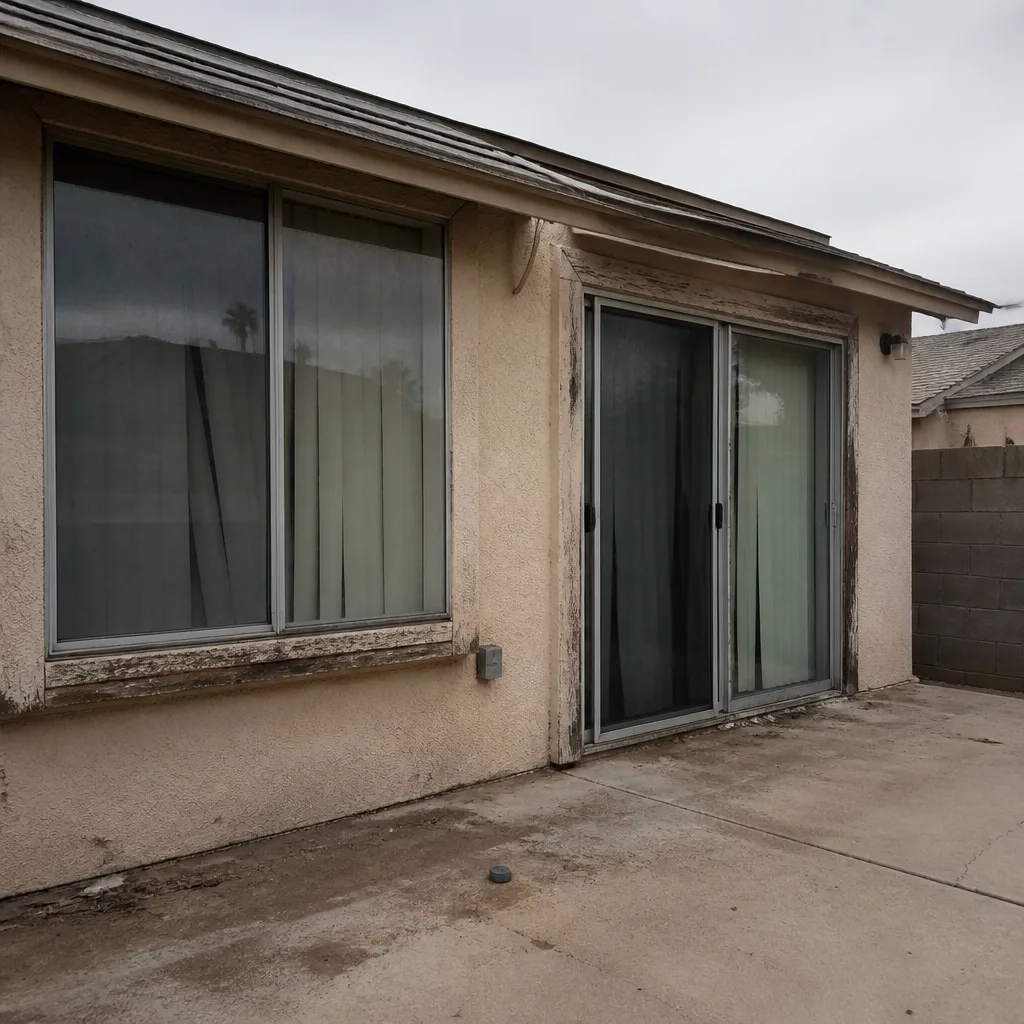
See the difference
 Before
 After
 Before
 After
 Before
 After
When to Call a Professional
Some situations absolutely call for a licensed installer with real permit experience: any replacement of a window or door in a bedroom or other sleeping room, any patio or French door replacement, any change to an opening’s size or configuration, any impact-rated installation, and any project in a North Las Vegas house built before the current energy code cycle – which is most houses in this city. If your prior installation was never inspected, if you’re uncertain whether the permit covers the units in your wall, or if a contractor is telling you the inspection doesn’t apply, call a professional.
The safety caveat matters here too. Removing and reinstalling a large window or glazed door involves heavy loads, glass handling, and structural connections that are easy to get wrong. A single large unit falling during installation is a serious injury. We do not recommend DIY removal of any glazed unit larger than a modest casement – tempered glass under stress can shatter, and the framing details that tie a window into a wall are not intuitive. TruePane Windows & Doors North Las Vegas offers free estimates in North Las Vegas. Call (833) 734-5506 to schedule yours; a live person answers the phone at any hour, and every estimate comes with the permit and inspection plan spelled out in writing.
Frequently Asked Questions
Yes, in nearly every case. The City of North Las Vegas generally requires a building permit for window replacement, and the replacement-in-kind exemption is narrower than most homeowners assume – the new windows must meet current-cycle energy compliance, which most older installed windows do not. Call (833) 734-5506 to confirm your specific address before assuming an exemption applies.
For Climate Zone 3B, which covers North Las Vegas, the Nevada Energy Code prescriptive path requires a maximum U-factor of 0.40 and a maximum Solar Heat Gain Coefficient of 0.25. The inspector verifies these against the NFRC label on the unit in the wall, not the sales brochure. If the product being installed cannot certify to those numbers in the exact configuration being ordered, the permit application will be returned.
The permit remains open in the city’s records, which can affect homeowner’s insurance claims and appear in title searches at resale. A failed final can also void manufacturer warranties if the installation record is incomplete. The remedy depends on the failure – sometimes it’s a documentation fix, sometimes it’s a reinstallation. Call (833) 734-5506 if you’re facing an open permit; we can walk through it with you.
Not automatically. The “same-size opening” myth misses two conditions: the new windows must still meet current-cycle energy compliance in the exact configuration, and no egress or structural change can be involved. In North Las Vegas, most same-size replacements still require a permit because the new product’s energy performance is what triggers the requirement, not the size. Confirm with the city in writing before skipping the permit.
The contractor pulls the permit and should attend the inspection, but the permit is recorded against your property, so the record is attached to your address. You should have the signed inspection sign-off in hand before the crew leaves. If the contractor does not provide it, ask. A closed permit with a recorded final inspection is the only result that protects your resale.
A complete submission for a standard residential replacement typically moves through plan review faster than an incomplete one – a compliant package with the fenestration schedule, NFRC documentation for each unit, and the correct Zone 3B compliance form is the single biggest factor in timing. Larger projects that change openings or involve impact-rated products may take longer. Call (833) 734-5506 for an exact quote and an honest timeline for your address – estimates are free.
The Bottom Line
North Las Vegas window and door replacements are permit-required in nearly every case, must meet the Nevada Energy Code’s Zone 3B thresholds (0.40 U-factor and 0.25 SHGC), and must pass a final inspection where the NFRC label on the installed unit is what counts. A permit is permission to begin – the inspection is what protects you. Keep four documents together for the life of the house: the NFRC label, the permit card, the inspection sign-off, and both warranty registrations. Confirm the jurisdiction before work starts, and treat “same size” as one condition among many, not the whole exemption. A failed inspection follows the house through insurance and title transfer, but an inspected, documented job – with both warranty layers registered in writing – follows it too, as an asset from the day the crew leaves.
TruePane Windows & Doors North Las Vegas is a second-generation glazier’s shop, proud to serve local communities for over 42 years and authorized for more than a dozen manufacturer lines. Every job carries the 90-Day Done Right Promise and The Keystone Standard. If the pane is not true, the job is not done. Call (833) 734-5506 for a free estimate – we’ll walk the permit, the compliance form, and the inspection checklist through with you in plain language, and we’ll be there when we say.
Written by the team at TruePane Windows & Doors North Las Vegas.